

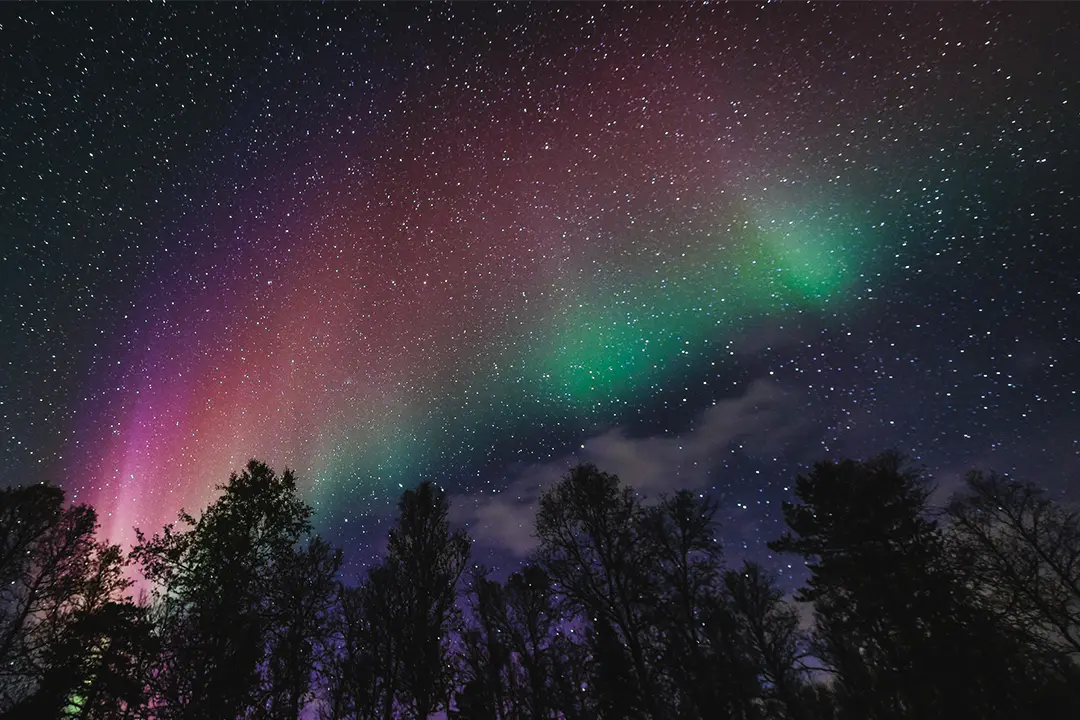
Solar maximum arrived in late 2024, and it brought some of the most dazzling Northern Lights in more than twenty years. Now the Sun is beginning its slow slide back towards solar minimum. So is the show over? Not even close.
For centuries, the aurora borealis has captivated photographers and explorers alike. Colours ripple across the Arctic sky in a spectacle that feels otherworldly.
And here’s the good news: the years just after solar maximum are often some of the best of the whole cycle for the Northern Lights. If they’re on your list, the 2026/27 season is a brilliant time to turn that dream into reality.
Our Norway expeditions place you in the perfect position to experience and photograph the aurora at its most vivid. With expert guides and stunning landscapes, every night offers the potential for magic.
The aurora borealis occurs when solar particles interact with Earth’s magnetic field near the poles. Carried by solar winds, these particles collide with gases high in the atmosphere, releasing light in flowing curtains and arcs.
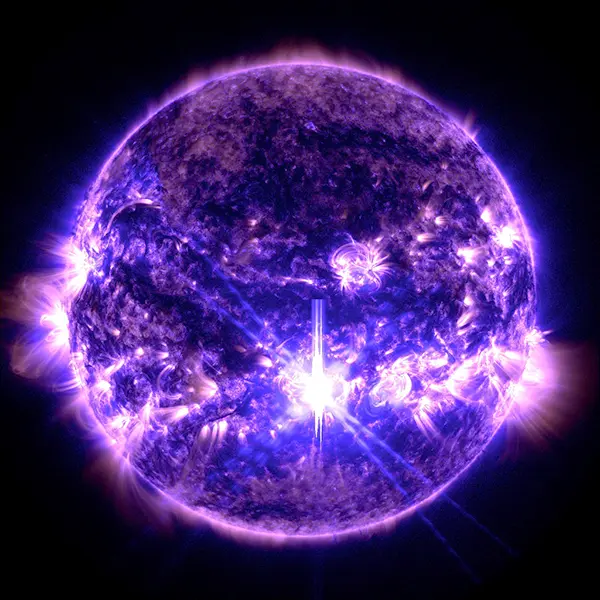
This display is driven by the Sun’s 11-year solar cycle. During solar maximum, the Sun produces more sunspots, flares and coronal mass ejections (CMEs). These events send more charged particles towards Earth, fuelling brighter, more frequent Northern Lights.
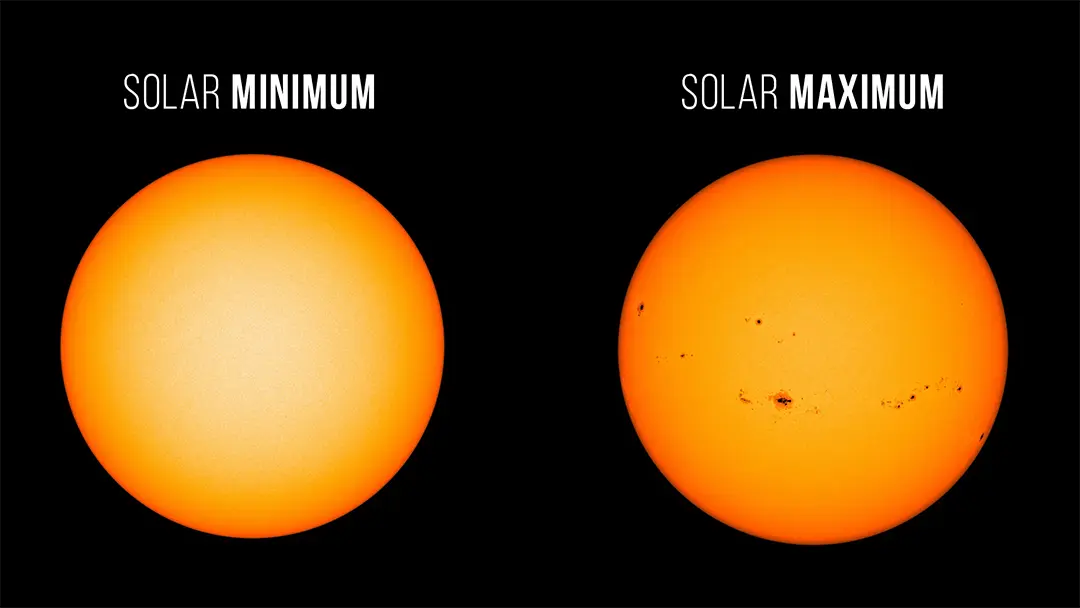
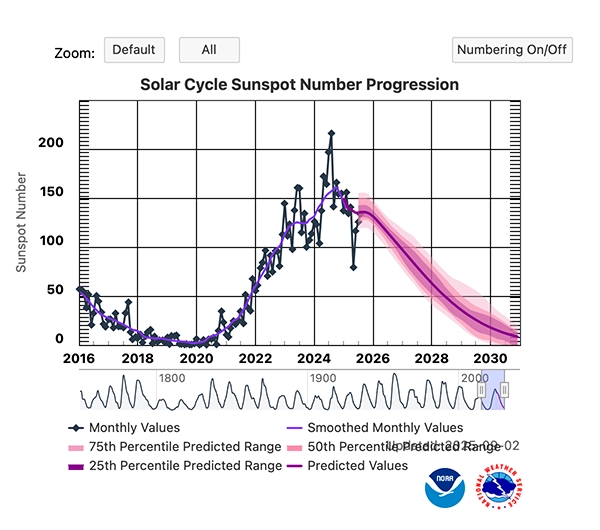
Solar Cycle 25 began in December 2019 and turned out far livelier than forecast. In October 2024, NASA and NOAA announced that the Sun had reached its solar maximum period, and sunspot counts now point to activity peaking around that month. Since then, the Sun has been in its declining phase.
Declining doesn’t mean quiet. As the Met Office points out, powerful flares and big CMEs still happen on the way down, and they have. In November 2025 a severe geomagnetic storm sent the aurora dancing far further south than usual across Europe and North America.
There’s another reason to be excited. As the Sun’s magnetic field settles, wide coronal holes open up and stream fast solar wind towards us. Those streams tend to come back round every 27 days or so as the Sun rotates, bringing regular moderate storms, exactly the kind that light up the sky above Arctic Norway.
As solar physicist Pål Brekke puts it, peak auroral activity tends to arrive a few years after solar maximum. That puts the 2026/27 season right in the sweet spot.
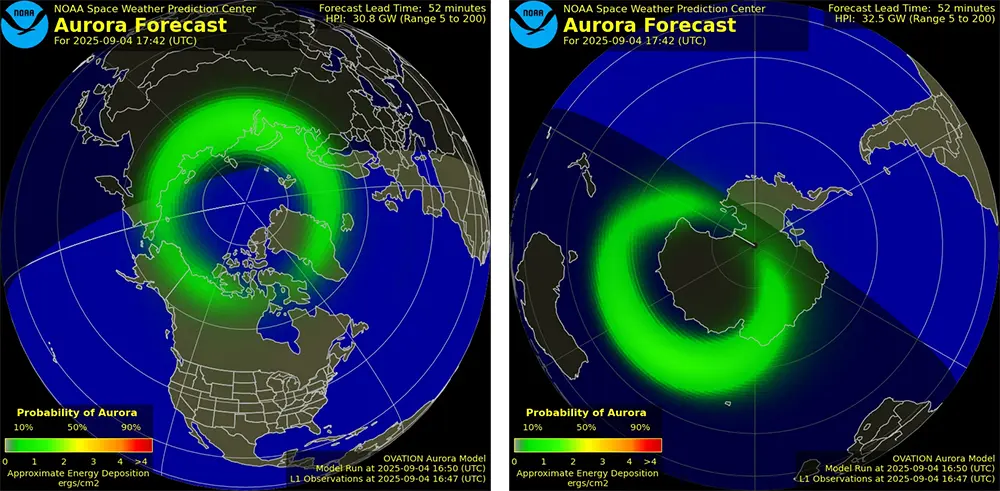
While strong auroras can reach as far south as the Mediterranean, consistent sightings happen roughly between latitudes 60° and 75°. This is the auroral zone, the most reliable region for Northern Lights displays. Here, even the smaller storms that follow solar maximum can put on a show.
Northern Norway sits perfectly within this zone. Here, Arctic landscapes meet the lights in dramatic fashion: fjords, mountain peaks and frozen coastlines all add depth to your images.
Our team has explored this region for over a decade, guiding hundreds of aurora chasers across Vesterålen and Lofoten. That experience makes every trip special, even when conditions shift.
Weather in the far north can be unpredictable. That’s why we design our trips with flexibility built in. If skies cloud over in one location, we move, chasing clearer conditions nearby.
Based in both Leknes and Sortland, we can quickly shift between coastal and inland areas. These regions offer different microclimates and better chances of clear nights.
Thanks to the Gulf Stream, Northern Norway enjoys relatively mild winters. Average temperatures of around -5°C make it more comfortable than many other aurora destinations. Still, it pays to dress for the Arctic: here’s what to wear on a Northern Lights photography trip.
The Sun may be past solar maximum, but the Northern Lights are far from finished. With long, dark Arctic nights from September to March, the 2026/27 season gives you plenty of sky to play with.
Join one of our small-group photography trips in Norway and experience the magic of the Northern Lights up close. With expert guidance, flexible planning and world-class scenery, this is your chance to capture something unforgettable.
Enjoyed this one?
Get new Journal posts, trip dates and moments from the field straight to your inbox. No spam, and you can unsubscribe at any time.
We only use your email to send these updates. Privacy Policy
I use Google Analytics cookies to see which pages people find useful. Is that OK? Cookie Policy