

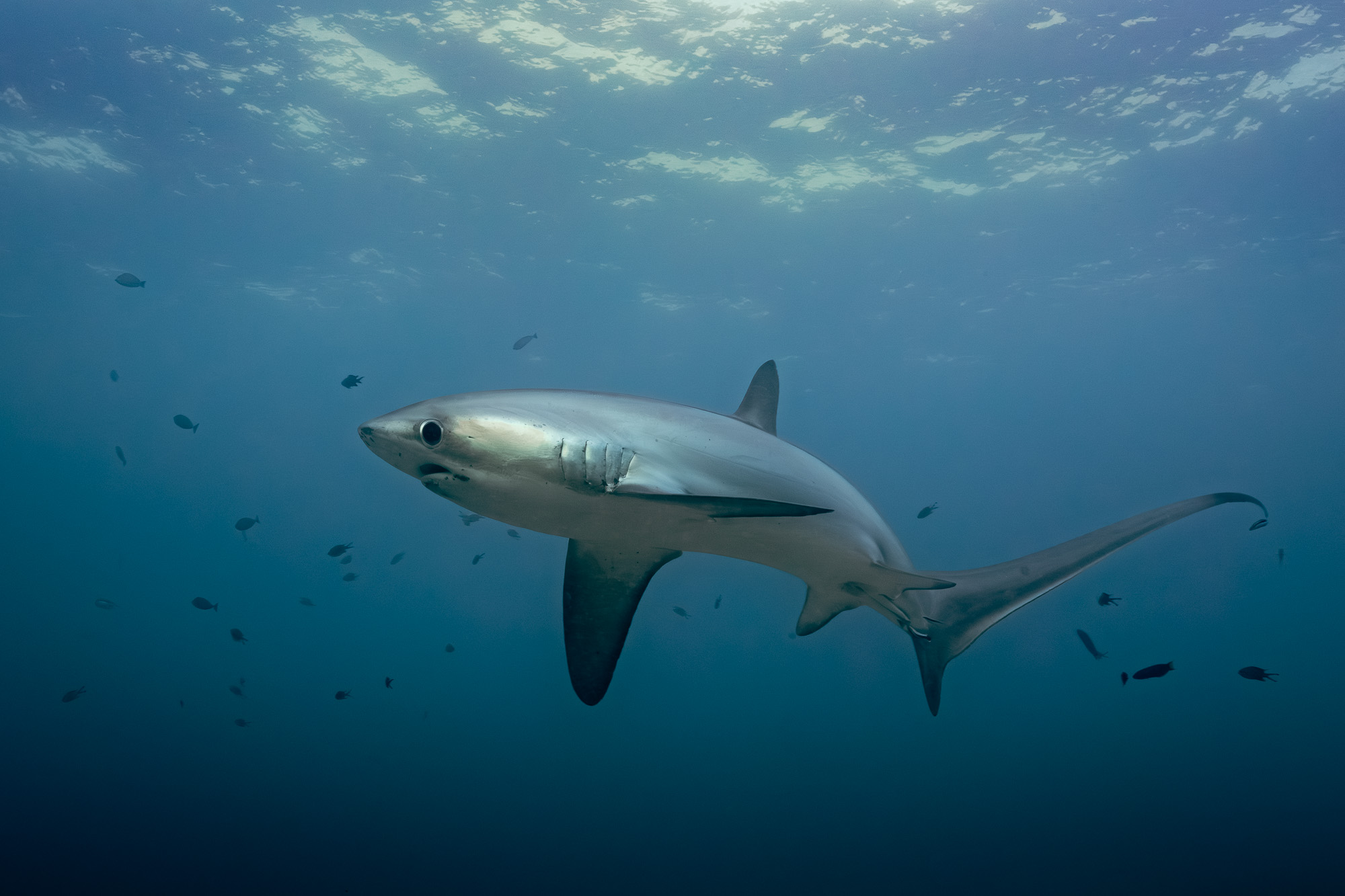
It’s still dark at the meeting point. Luckily, I’m an early riser. A few faces around me looked like they’d happily trade the dive for another hour in bed. The boat ride out is quiet, just the engine and the first grey light spreading over the water. Then we’re down on the edge of Monad Shoal, the surge gently rocking us back and forth, eyes fixed on the blue. A shape slides out of the gloom: a pelagic thresher shark, its impossibly long tail sweeping behind it like a ribbon.
Malapascua, a small island off the northern tip of Cebu in the Philippines, is one of the few places on Earth where you can reliably dive with thresher sharks. In April 2017 I spent five mornings there, diving at first light, and we saw thresher sharks on every single dive, often up to a dozen of them.
It was the grand finale of the Big3 Adventure, a trip I led for a group of guests: whale sharks at Donsol, manta rays at Ticao Island and the incredible pelagic thresher sharks of Malapascua.
With thresher sharks, it’s all about the tail. The upper lobe can be as long as the rest of the shark, and they use it like a whip to stun schools of small fish and squid. Threshers spend much of their lives in deep water, and their large eyes are built for the dim light far below. Yet each morning at Monad Shoal they rise from the depths to visit cleaning stations, where cleaner wrasse pick parasites from their skin while the sharks circle slowly overhead.
Watching them is wonderfully relaxing. They move with real elegance, gliding in a slow figure of eight around the cleaning station and repeating the same loop again and again. Suspended between two worlds, they’re one of the ocean’s most unforgettable sights.
Boats leave around 5 a.m. to reach Monad Shoal at first light. The cleaning stations sit at roughly 25 to 30 metres, so most dive centres ask for Advanced Open Water. My guests and I all dived on Nitrox for a little extra bottom time, and I’d recommend it. There were about a dozen divers on our boat.
Discipline is everything. Thresher sharks are skittish and easily frightened, so you stay low, keep still and let them come to you. No strobes or video lights are allowed: their eyes are sensitive to light, so only natural light is permitted. Get it right and the sharks carry on circling as if you weren’t there.
The boat ride out is always quiet. The ride back is a very different story, with everyone talking at once about what they’ve just seen.
Thresher sharks visit Monad Shoal all year round. April is often suggested as the best month for visibility, and that’s when we went. The visibility was generally good, though now and then it dipped for a while, and the sea was mostly calm, with a little surge on some dives.
Dawn light at 30 metres is limited, and with no strobes you have to shoot differently. Low light doesn’t have to mean poor images.
The photo at the top of this post was taken on a Canon EOS-1D X Mark II in a Subal housing with a 230 mm dome port, using natural light only: f/6.3, 1/100 sec, ISO 1000. The small fish busy around the shark are cleaner wrasse.
Before you press the shutter, watch. Because the sharks repeat their figure-of-eight loop, one that passes once will usually come back the same way. Pick your spot, keep other divers and their bubbles out of the frame, and be ready when that long tail slices through the water.
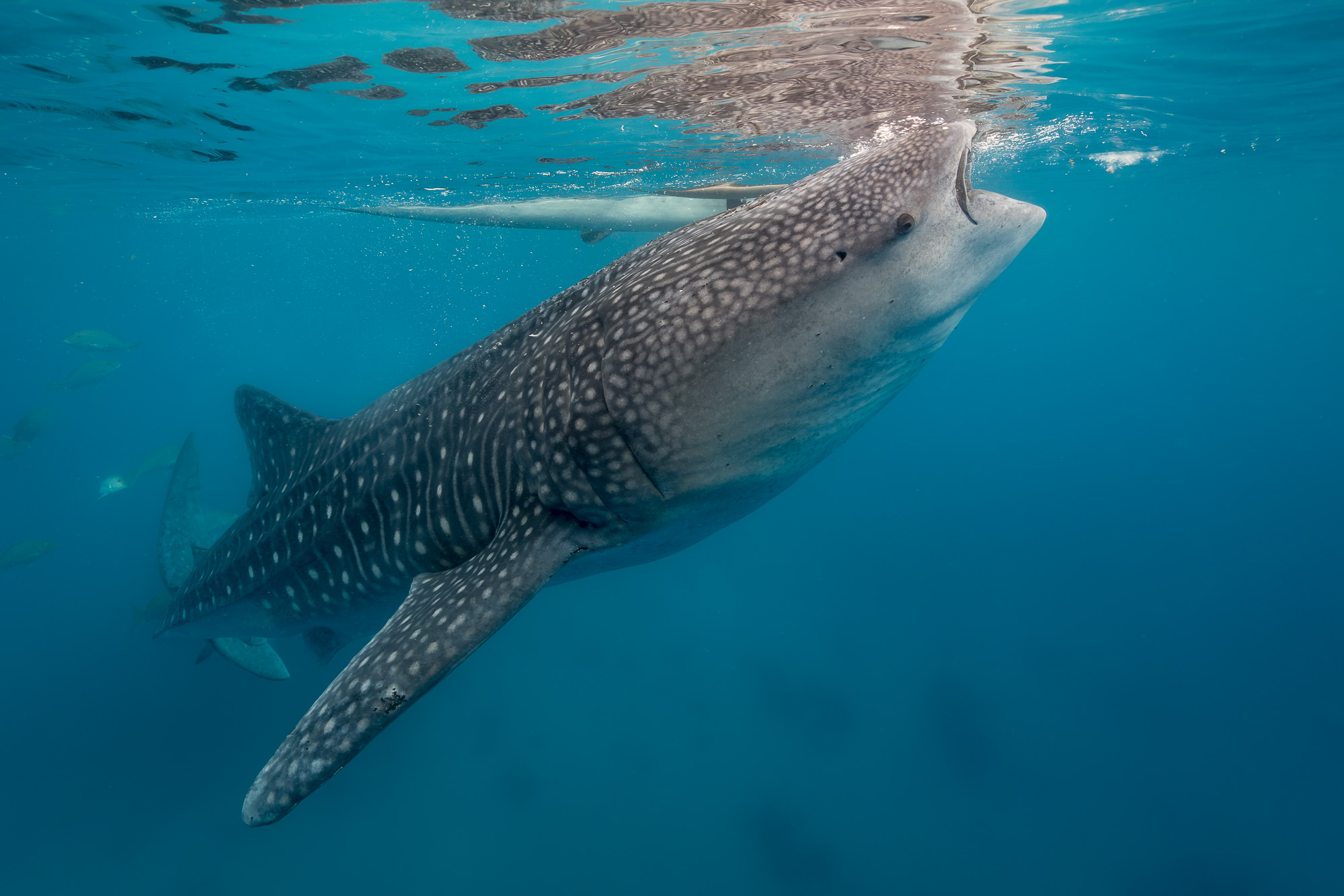
Malapascua was the last stop on a two-week trip. We flew into Legazpi in the Bicol region (flights now land at the newer Bicol International Airport) and travelled between the islands by boat. At Donsol Bay we snorkelled with whale sharks under strict rules for being in the water with them. The visibility wasn’t great, but I loved their ethical approach. At Manta Bowl in the Ticao Pass, close to Ticao Island, we dived with lots of manta rays. Great fun.
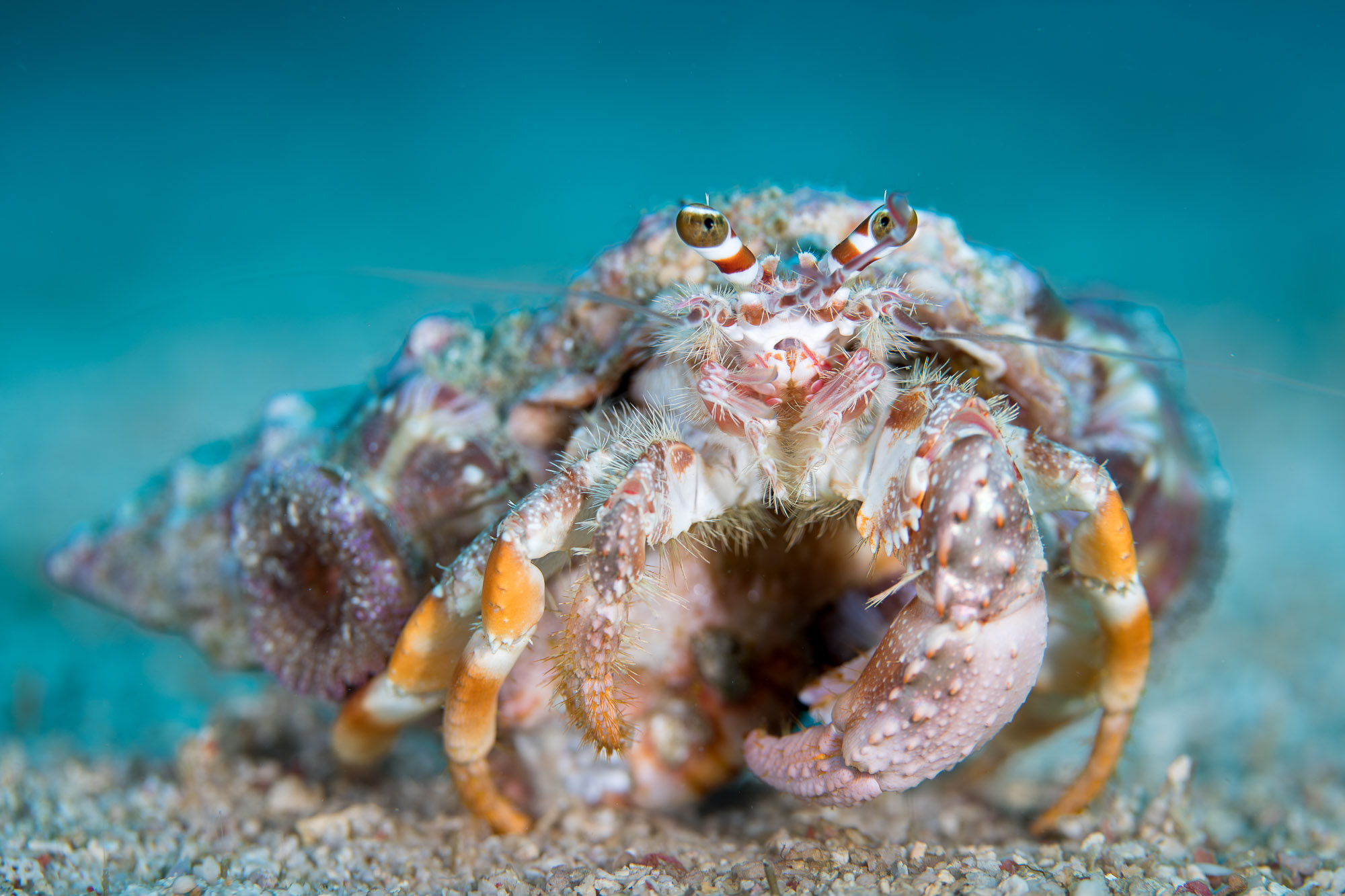
Ticao is best known for its mantas, but it’s also a superb place for macro, with rich and diverse critter dives. I found this hermit crab on a coral slope off the north of the island. And when the trip ended, I couldn’t resist more time with whale sharks, so I extended my stay by five days to dive at Oslob, in southern Cebu.
If you’re only heading to Malapascua, Cebu is the usual way in, with a drive north to Maya and a short boat crossing to the island.
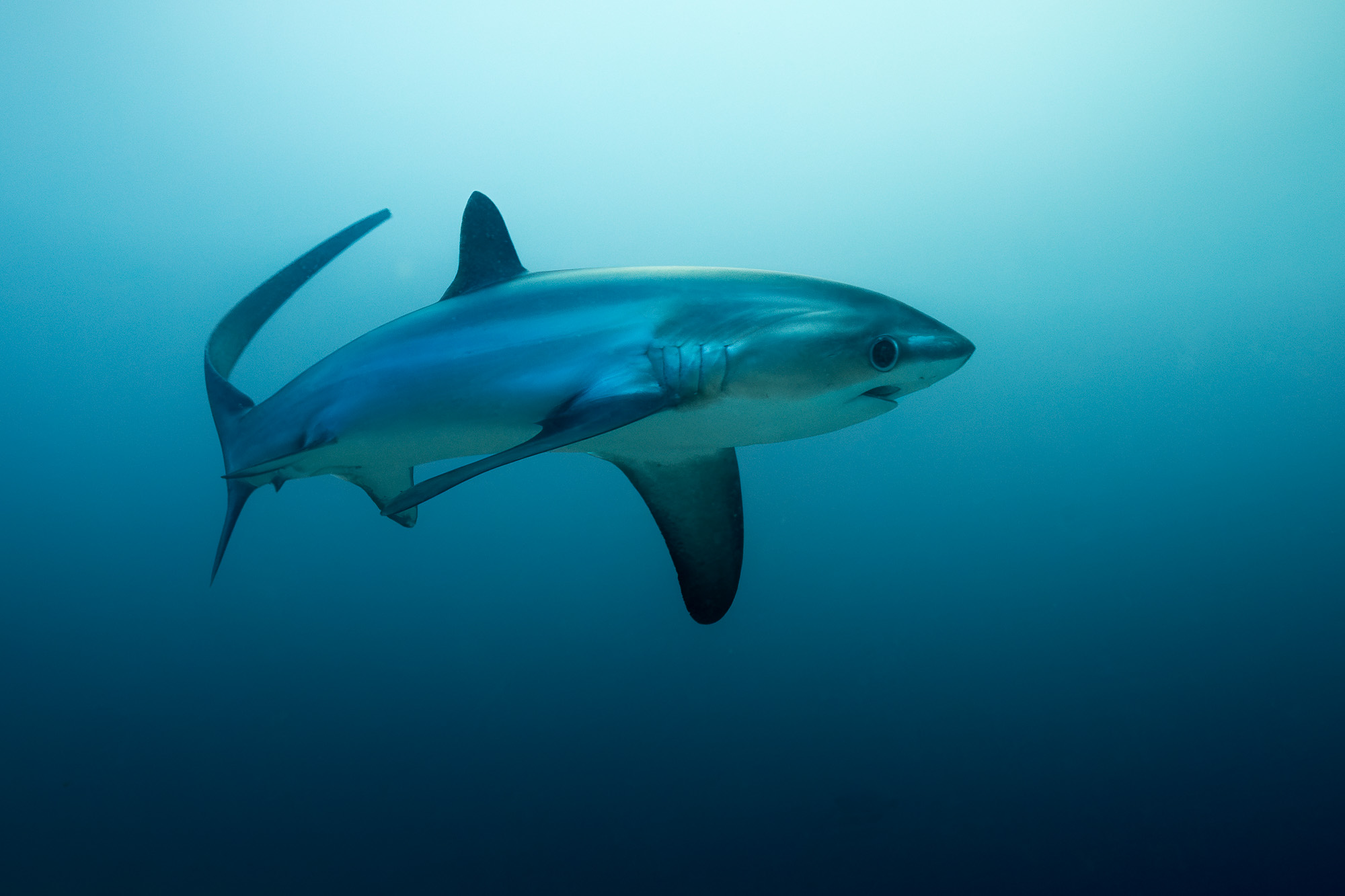
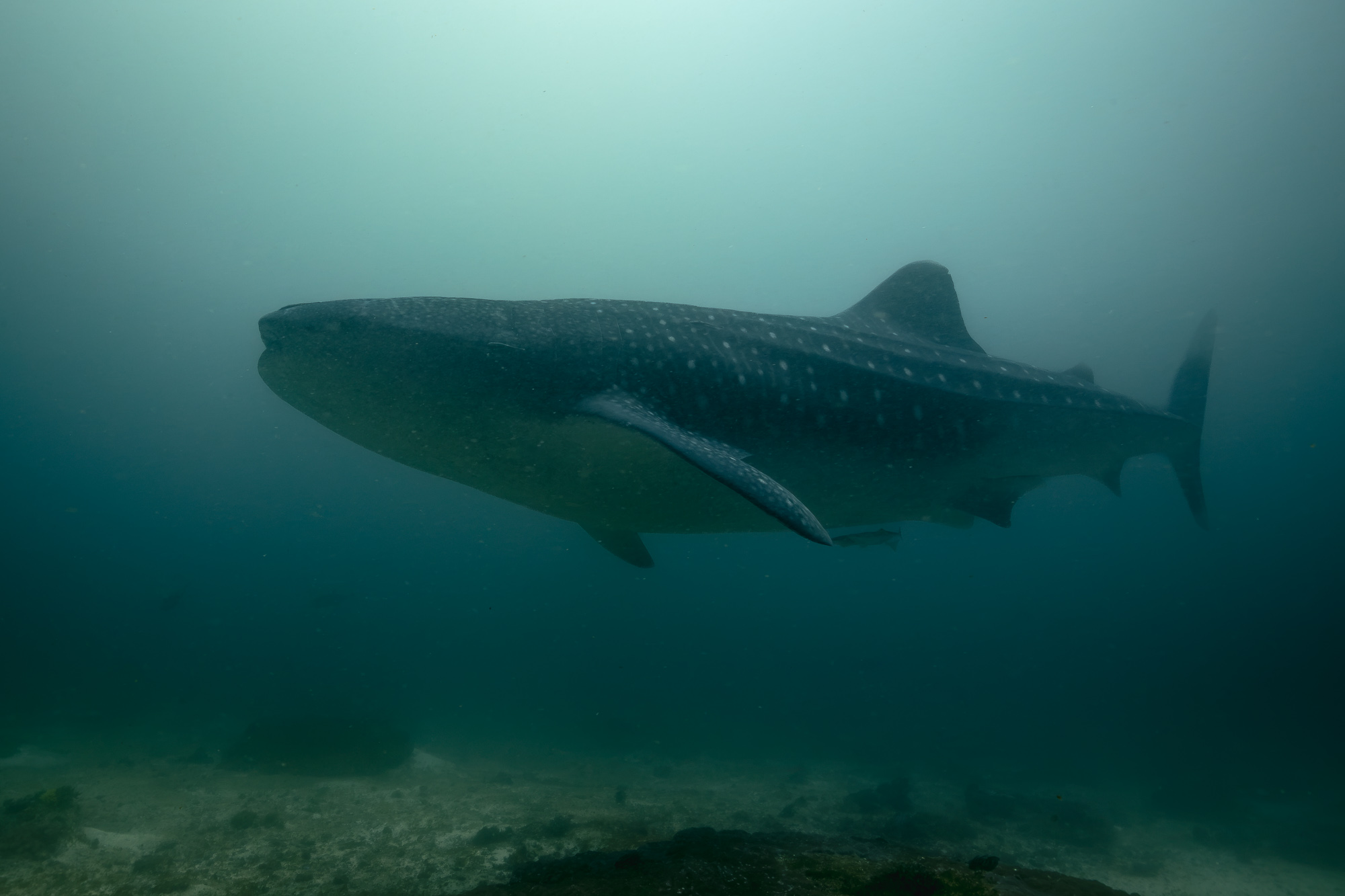

Pelagic thresher sharks are listed as Endangered on the IUCN Red List. Overfishing and bycatch are the main causes of their decline, and as slow-growing sharks that mature late, they’re slow to recover. Disciplined, low-impact diving at places like Monad Shoal shows these sharks are worth far more alive than dead.
Would I go back? Absolutely. Five dawns with the thresher sharks of Malapascua is a wonderful experience.
Hungry for more sharks? Spend a morning with a great white shark in False Bay, or head north with me chasing orcas through Norway’s icy wilderness.
Enjoyed this one?
Get new Journal posts, trip dates and moments from the field straight to your inbox. No spam, and you can unsubscribe at any time.
We only use your email to send these updates. Privacy Policy
I use Google Analytics cookies to see which pages people find useful. Is that OK? Cookie Policy