For countless people, witnessing orcas in their natural habitat is a once-in-a-lifetime dream. Northern Norway is one of the very best places on Earth to make that dream a reality.
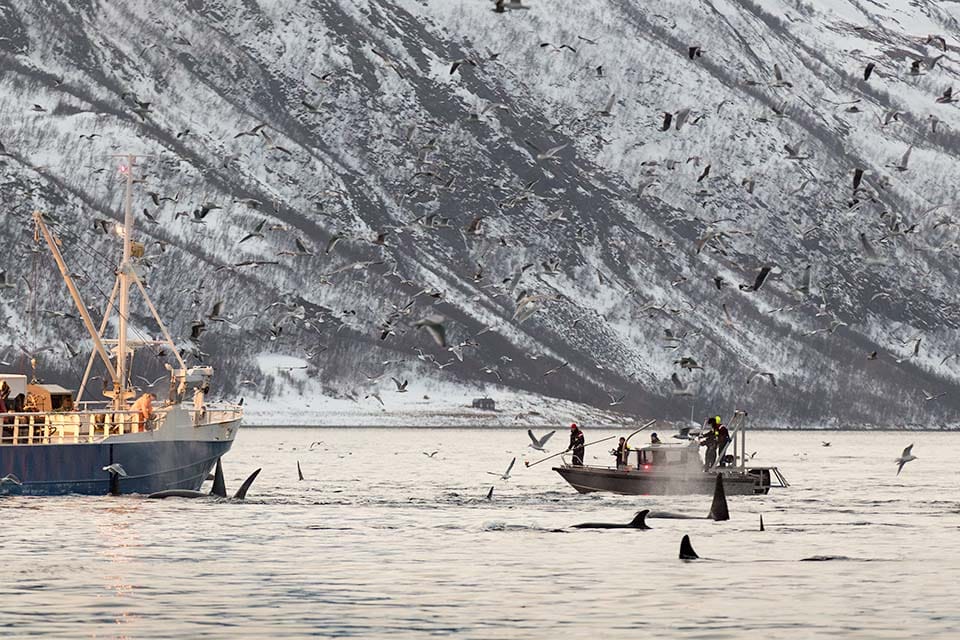
From late October to mid-January, far above the Arctic Circle at around 70 degrees north, an extraordinary spectacle unfolds. The world’s largest gathering of orcas descends on these icy fjords, drawn by the annual herring migration. Massive schools of herring flood the waters, and orcas hunt with precision. They are often joined by majestic humpback whales. In this frozen theatre of nature, it is not uncommon to see 50 to 60 orcas feeding side by side. It is a breathtaking display of power, strategy, and raw Arctic beauty.
The fjords themselves provide deep, sheltered waters ideal for orca hunting. Their steep walls and narrow channels allow the whales to herd fish with skill. Moreover, the calm, clear waters make every movement visible. This extraordinary combination of natural strategy and stunning landscapes makes Northern Norway the ultimate destination for observing orcas in action.
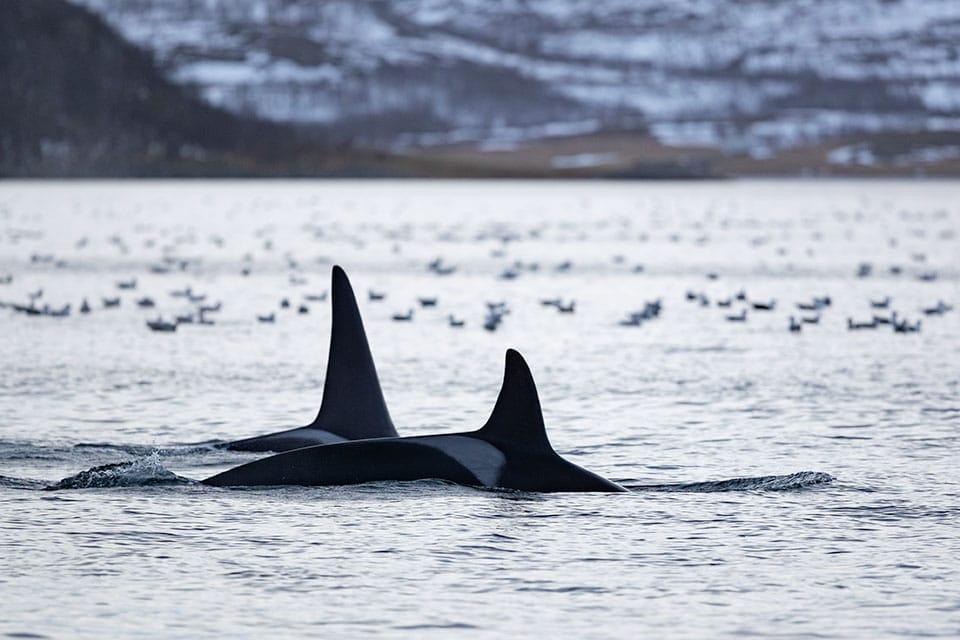
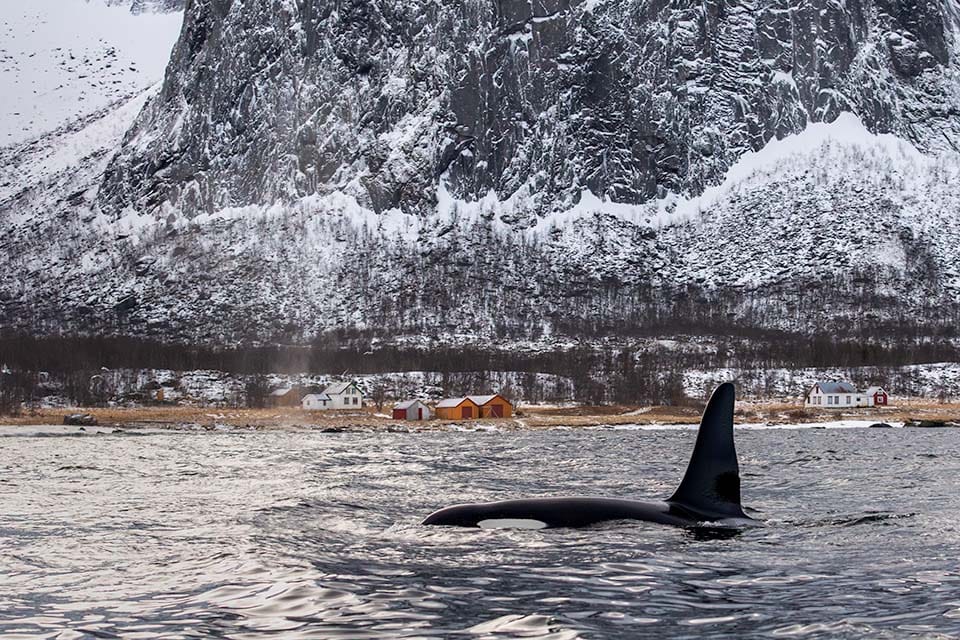
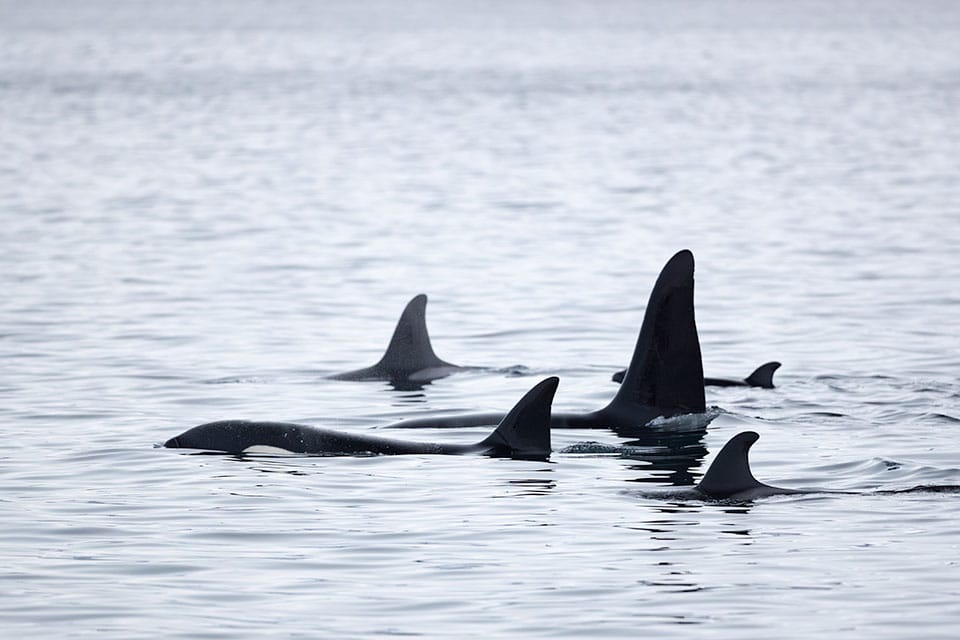
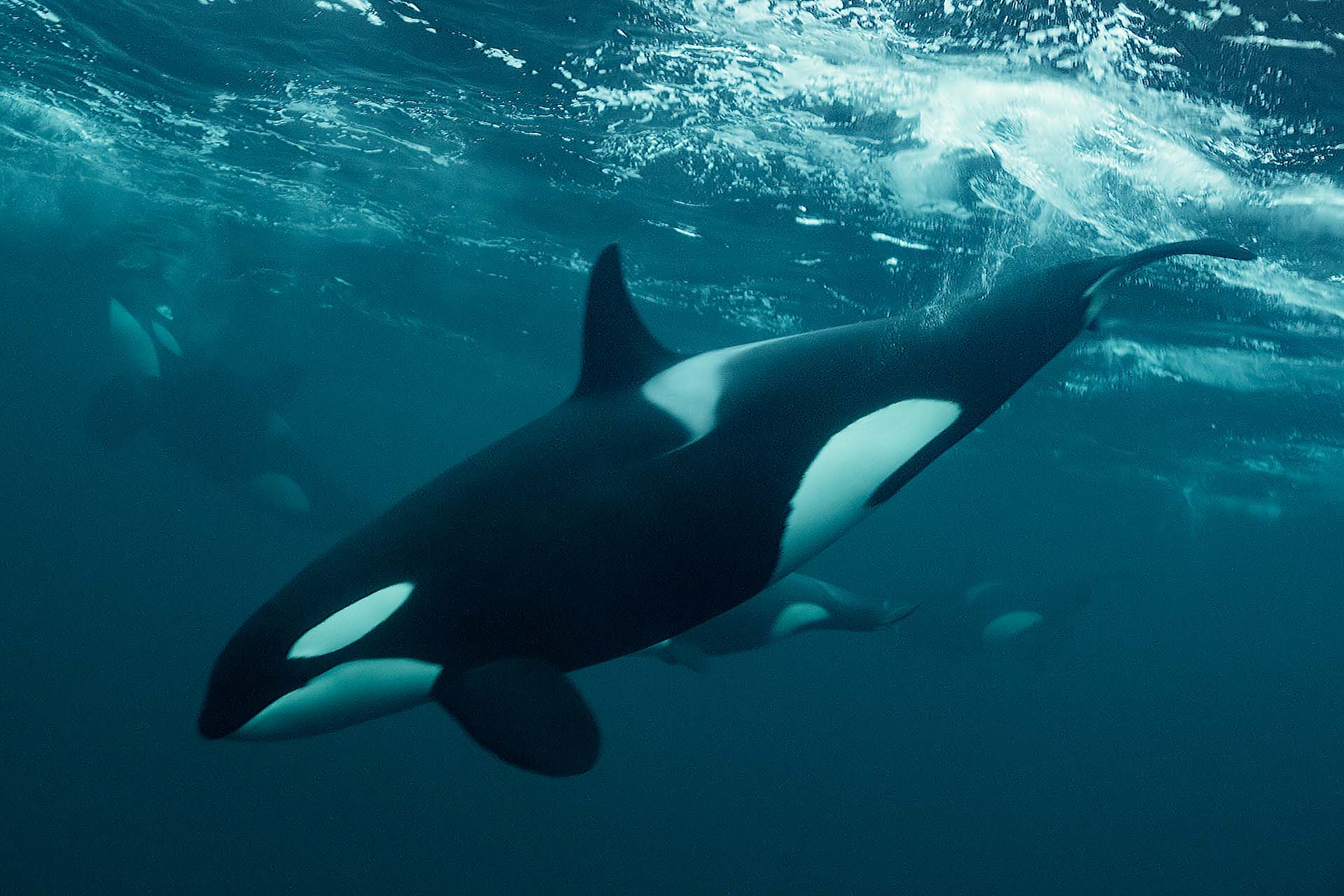
Enormous and awe-inspiring, male orcas can stretch up to 8 m (26 ft) long, dwarfing females at 6–7 m (18–22 ft). Their muscular bodies, built like underwater warriors, can weigh a staggering 5,000 kg (11,000 lb). Their towering dorsal fins rise like dark sentinels above the waves—sometimes as tall as a standing human. Coming face-to-face with one in the wild is an unforgettable thrill. It offers a glimpse into the raw power of the Arctic’s greatest predators.
The best way to enjoy an intimate encounter with orcas is from a smaller boat, such as a zodiac, which allows you to get closer to the animals. For these encounters, conditions must be just right—calm seas and relaxed orcas are essential. Once in the water, it is important not to chase the whales or swim directly towards them. Orcas must feel comfortable in your presence. Over-enthusiasm can startle or even scare them away. The best encounters often come from swimming alongside the orcas, in parallel with their direction of travel. Rolling onto your side to reveal your belly shows that you are not a threat.
I have enjoyed many incredible experiences in the ocean by following this approach, a practice I learned from Pierre Robert de Latour. Pierre founded the Undersea Soft Encounter Alliance (USEA). The core principles are respect and protection.
Orca encounters in Norway are truly one of a kind. The orcas here often hunt using a method called ‘carousel feeding’. They encircle the herring, forcing the fish into a tight ball, then slap them with their tail flukes. This stuns or even kills several at once. Consequently, this allows the orcas to eat the herring one by one—an elegant, almost fine-dining approach in the wild.
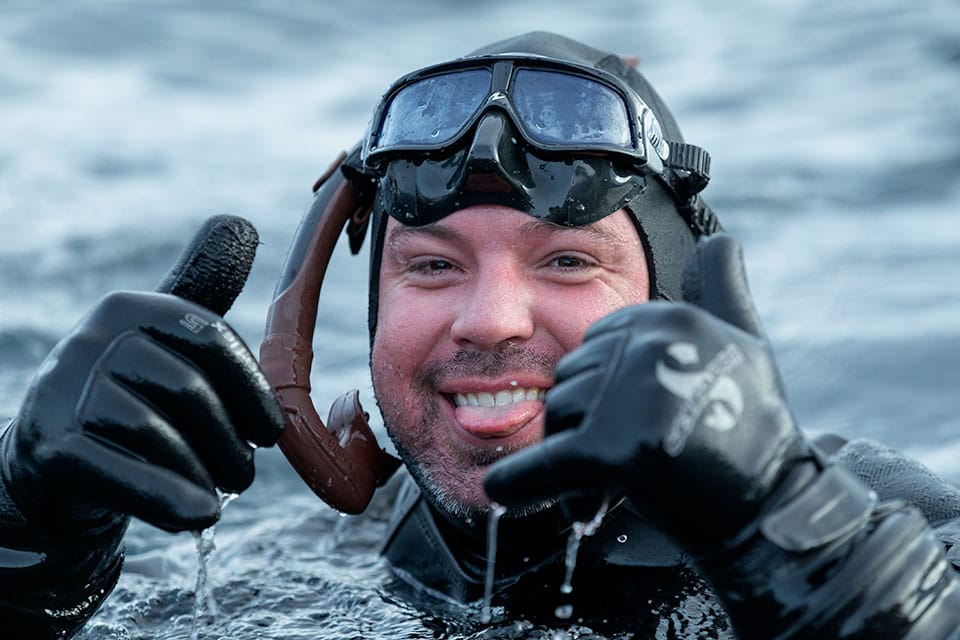
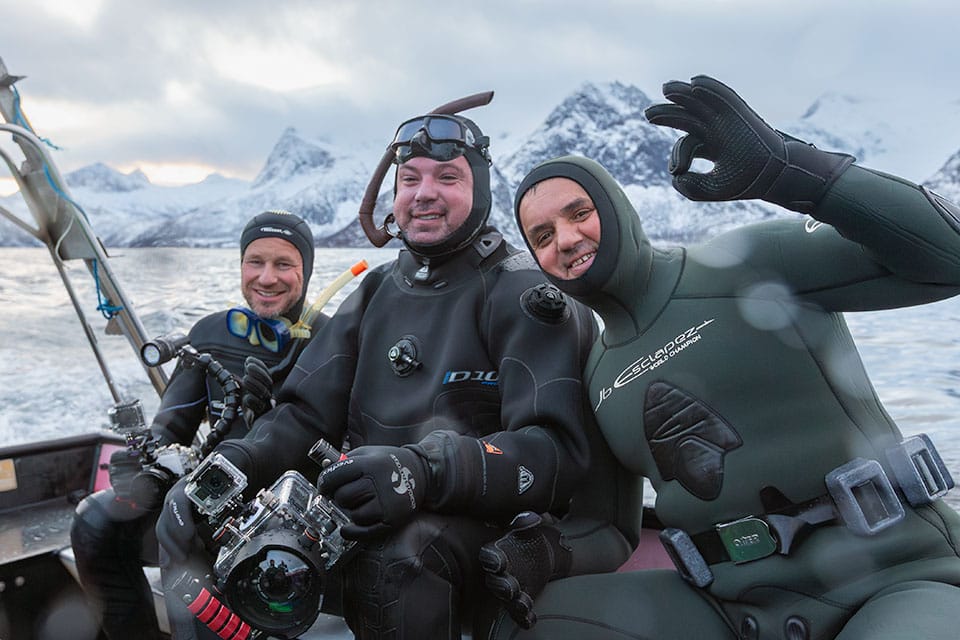
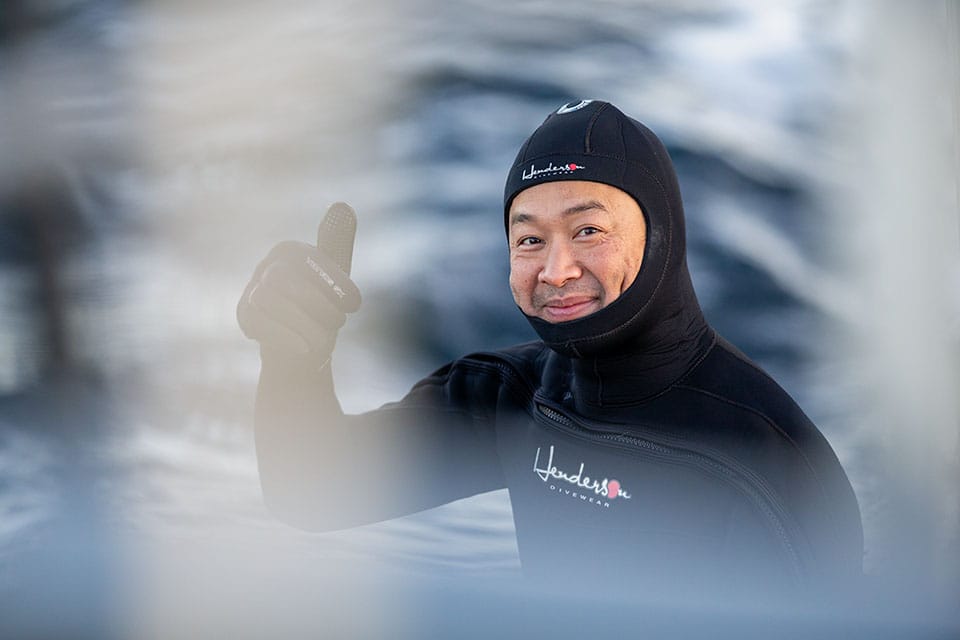
Whether above or below the surface, the cold is a constant challenge. The wind chill on the boat can be biting, and the frigid waters quickly leave your fingers and toes numb. Daylight is often limited, making high ISOs essential to capture the moment. Thick 5 mm gloves underwater can make handling your camera tricky, and it may take some practice to get the perfect shot.
Yet all the cold and effort quickly fade when you share the ocean with a majestic orca. It is an experience that is hard to beat—one that stays with you long after you leave the Arctic waters.