

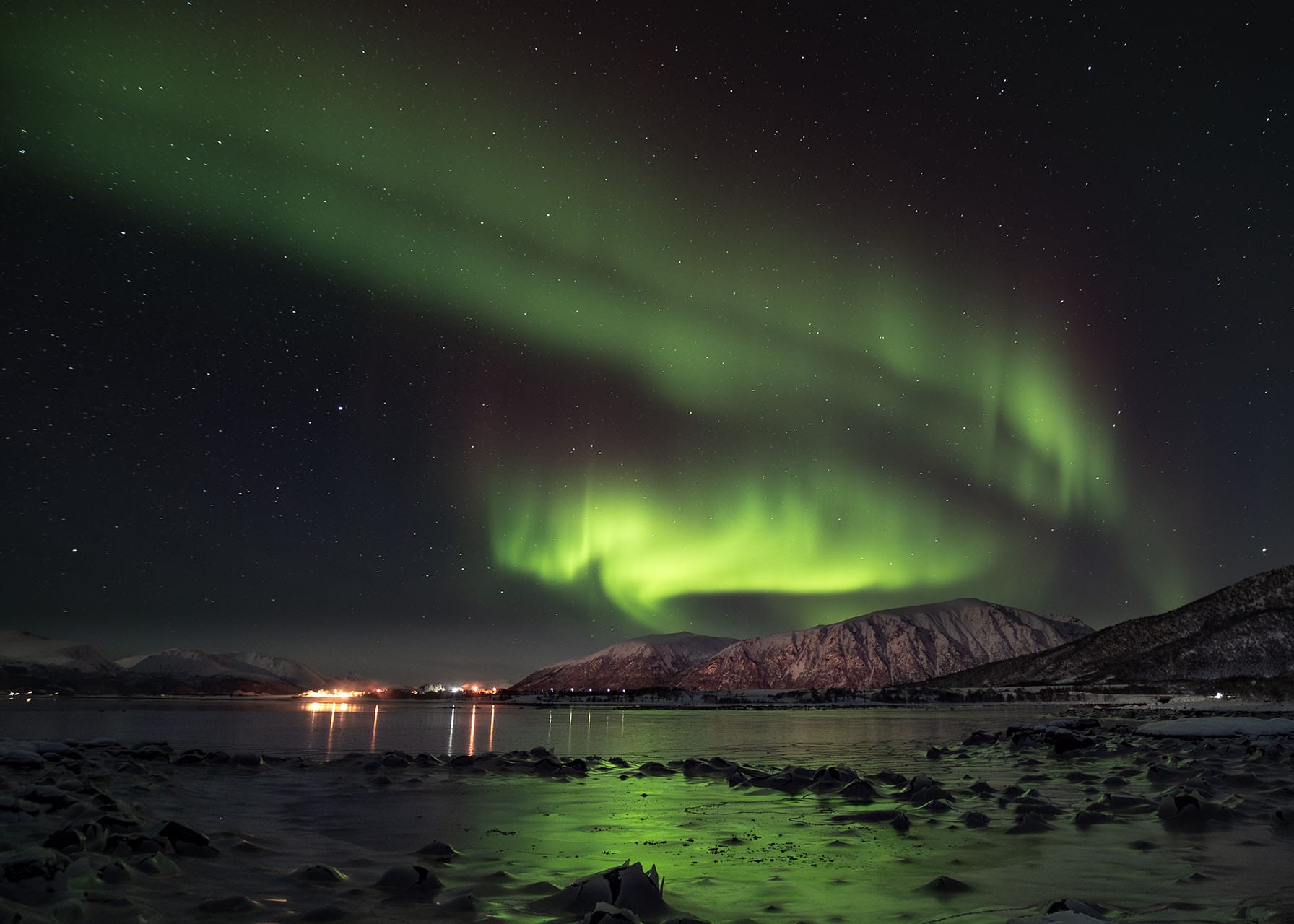
The Northern Lights are one of nature’s most spellbinding spectacles — a celestial ballet that you can witness under the wild, untouched skies of the far north.
There’s a moment — standing beneath a vast, starlit Arctic sky in perfect silence — when everything seems to shift. A ribbon of green light unfurls along the horizon, then bursts into waves of colour that ripple, swirl, and shimmer overhead. This is the Northern Lights, or aurora borealis, and seeing them for the first time feels like stepping into a dream. No photograph, story, or video can truly capture the experience. It’s not just a sight; it’s a feeling — a surreal mix of awe, joy, and the humbling magic of nature at its most mysterious.
The Northern Lights, or aurora borealis, are born from a cosmic dance between charged particles from the Sun and Earth’s magnetic field and atmosphere.
Here’s the lowdown:
The colours you witness depend on the gases involved:
In essence, the Northern Lights are a spectacular natural light show, powered by the Sun and shaped by Earth’s magnetic forces.
Right now we’re experiencing solar maximum — the peak of the Sun’s approximately 11-year magnetic cycle. During this period the Sun is bursting with energy producing more sunspots solar flares and coronal mass ejections (CMEs). These CMEs are enormous blasts of solar material hurled into space and when they slam into Earth’s atmosphere they supercharge the auroras making them brighter more vivid and visible much farther south than usual.
Here’s the exciting bit: the aurora’s magic doesn’t vanish as soon as the solar maximum ends. In fact the few years following this peak are often the best for aurora hunting as solar activity remains high and unpredictable.
So if you’ve been dreaming of catching the Northern Lights now’s the perfect time to plan your adventure — the next four to five years promise some of the most spectacular displays in living memory.
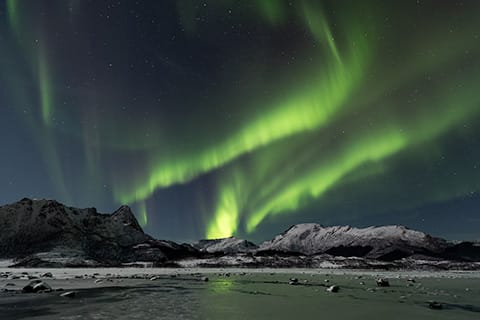
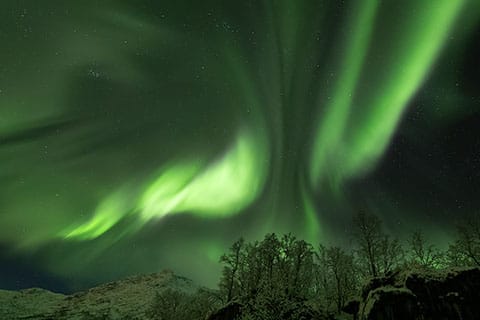
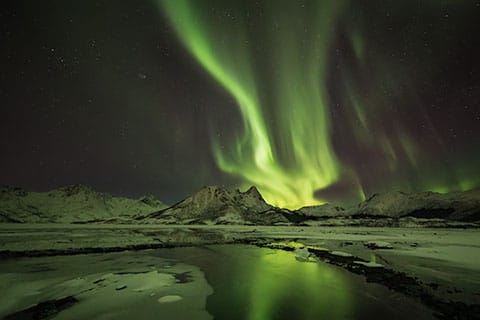
The best time to see the Northern Lights is during the darkest months of the year typically from September to April when long nights give you the best chance to spot them. For the finest viewing venture outside between 9 p.m. and 3 a.m. when aurora activity tends to peak.
While the aurora is technically active 24 hours a day every day of the year that doesn’t mean it’s always visible. To catch a glimpse you need clear dark skies — and to be in the right place at the right time.
That place is the auroral zone — a wide doughnut-shaped ring around the Earth’s magnetic pole where the Northern Lights are most frequent. This zone sweeps across northern Norway Sweden Finland Iceland Greenland northern Canada Alaska and northern Siberia. The auroral oval shifts and expands with solar activity especially during geomagnetic storms.
Our personal favourites? The wild and rugged archipelagos of Vesterålen and Lofoten in northern Norway — remote dramatic and perfectly positioned under the auroral oval.
During strong geomagnetic storms the lights can even dip much farther south illuminating skies across the continental U.S. the U.K. and central Europe — a rare and breathtaking spectacle.
If you’re yearning to witness the Northern Lights for yourself now’s the time to start planning. Explore our trips and let us guide you on an unforgettable journey beneath one of nature’s most magical wonders.