

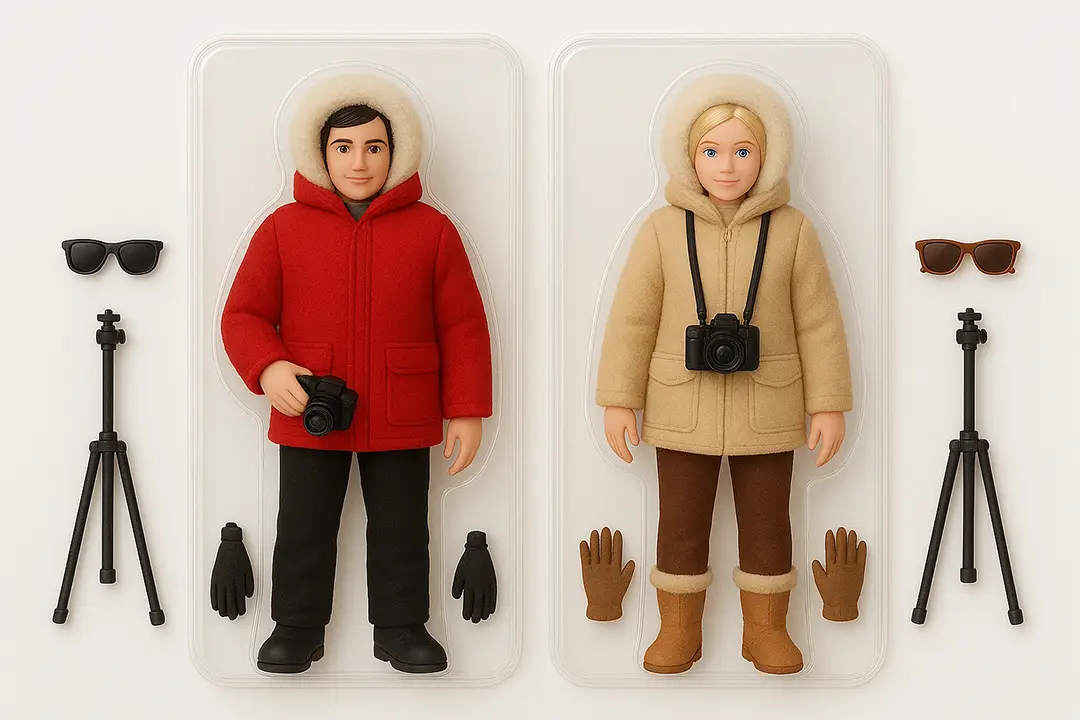
Heading north to chase the Arctic Northern Lights? Or planning to explore snowy Arctic landscapes by day? Either way, it will be cold, and the weather can change quickly. The secret to enjoying it is simple: wear the right gear.
As Alfred Wainwright once said, “There’s no such thing as bad weather, only unsuitable clothing.” He was right—being prepared makes all the difference.
Norway’s coast is warmer than you might expect thanks to the Gulf Stream. But don’t be fooled—you’ll still need layers. In autumn, expect around 3°C in the day and about -2°C at night. In winter, daytime is often around -3°C, dropping to -7°C or colder after sunset.
With the right kit, you can sit under the stars for hours, waiting for the aurora to appear. I’ve done it at -15°C—cold, yes, but never unbearable. And a flask of hot chocolate always helps.
Pack smart, dress in layers, and you’ll spend your trip soaking up Arctic magic—not shivering through it.
For an Arctic Northern Lights holiday, the most important thing to remember is the layering system.
Layering helps you stay warm without overheating. It also lets you adjust to changing conditions by adding or removing layers. On guided Arctic photography trips, style doesn’t matter. Comfort and function always come first.
This is the best gear for warmth and comfort. It costs more but performs better.
This option is more affordable but still effective. It focuses on layering with synthetic fabrics.
*Wool is always better but more expensive. Make sure your boots have space for your feet to move. This allows a layer of warm air to form. You can double up on socks, but only if your boots are not too tight. Tight boots will make you feel colder.
A few small items make a big difference:
If you start to feel cold, even a little, say so straight away. Once you are cold, it is much harder to warm up again. If caught early, small steps can stop it becoming uncomfortable.
Pay attention to what your body tells you. No one else feels exactly what you do, so don’t be shy about speaking up.
If you are unsure about clothing or packing for a Northern Lights trip, please get in touch. We’re happy to help you prepare so that your trip is comfortable, safe, and unforgettable.